

Ronaldinho: Career, Barcelona, World Cup Glory & Magic
Published on 01.10.2026 in Football
Some players can have their careers summed up by trophies. Ronaldinho is not one of them. Of course, his honours include a World Cup, the Champions League and the Ballon d’Or. But those who watched him play tend to remember something else: the smile, the stepovers, the no-look passes and defenders left wondering where the ball had gone.
Ronaldinho played with a freedom that never disappeared, even on football’s biggest stages. His best years were defined by technique, creativity and an almost limitless joy for the game.
It was at Barcelona that this combination made him a global icon.
And although his playing career seemed to be long over, Ronaldinho is writing another chapter in 2026.
The early years in Brazil
Ronaldo de Assis Moreira, better known as Ronaldinho, was born in Porto Alegre on March 21, 1980. He made his first major steps in professional football at Grêmio, where it quickly became clear that he had an extraordinary relationship with the ball.
Ronaldinho was neither a traditional winger nor a pure playmaker. He drifted between the lines, looked for one-on-one situations and could finish moves himself or create chances for teammates. His technique was never just for show. Many of his most spectacular moments came in situations where other players would have struggled to find a solution.
His talent eventually took him to Europe. In 2001, he joined Paris Saint-Germain and began to make a name for himself on the international stage.
The 2002 World Cup winner
The biggest stage was already waiting for him with Brazil.
At the 2002 World Cup, Ronaldinho was part of an attack featuring Ronaldo and Rivaldo. In the quarter-final against England, he became one of the decisive figures as Brazil won 2-1, with Ronaldinho scoring the goal that sent his side through to the semi-finals.
In the final against Germany came the biggest title of his career up to that point. Brazil won 2-0 to lift the World Cup.
Ronaldinho was a world champion at just 22 years old. From there, his career went to another level.
Barcelona turn Ronaldinho into a superstar
In 2003, he moved to Barcelona – the spell that would define his career for many fans.
Barcelona were not going through one of the strongest periods in their history at the time. Ronaldinho helped change that. His dribbling, passing and set-piece ability quickly made him one of the team’s key players.
What made him especially difficult to defend was his ability to play in tight spaces and still find a way through.
A defender could think he had the situation under control, only for Ronaldinho to glide past him seconds later.
Under Frank Rijkaard, Barcelona developed into one of Europe’s leading sides. The club won LaLiga in 2005, while Ronaldinho was named Ballon d’Or winner that same year.
The night the Bernabéu applauded Ronaldinho
One match captures Ronaldinho’s impact better than almost any other.
On November 19, 2005, Barcelona travelled to Real Madrid and won 3-0. Ronaldinho scored twice, with both goals featuring the kind of individual brilliance that became synonymous with him.
He repeatedly cut in from the left, took on the Madrid defence and finished with confidence. At the final whistle came something rarely seen at the Santiago Bernabéu: sections of the home crowd applauded a player from the opposing team.
Ronaldinho had not only beaten Real Madrid. His performance had earned the respect of the rival supporters. Barcelona still look back on the game as one of the most memorable Clásicos in the club’s history.
More than showmanship – Ronaldinho wins the Champions League
The clearest proof that Ronaldinho was more than a spectacular entertainer came in 2006.
Barcelona reached the Champions League final and faced Arsenal at the Stade de France. Arsenal took the lead, but Barcelona turned the match around through goals from Samuel Eto’o and Juliano Belletti to win 2-1.
Ronaldinho had now won Europe’s biggest club prize. UEFA also recognised him as the competition’s outstanding player after that season.
His Barcelona years had reached their peak. He was a World Cup winner, Ballon d’Or winner and Champions League winner – while also being one of the most entertaining footballers of his generation.
What made Ronaldinho different
One of the qualities that separated Ronaldinho from many other stars was his willingness to take risks.
He attempted passes others would never have seen. He took defenders on one-on-one even when a safer option was available. And his tricks were not simply for the highlight reel; he could use them to create separation and escape pressure in real match situations.
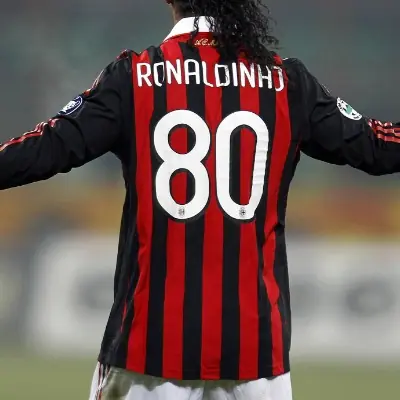
There was also another side to the story. His consistency dipped after his outstanding years in Barcelona. In 2008, he joined AC Milan, followed by spells at Flamengo, Atlético Mineiro, Querétaro and Fluminense.
Even then, he continued to collect memorable honours. With Atlético Mineiro, he won the Copa Libertadores in 2013 before his playing career gradually came to an end. His final official professional appearance came for Fluminense in 2015, while he officially retired in 2018.
Ronaldinho stayed close to football after retirement
Ronaldinho never truly disappeared from the football world after stepping away from the professional game.
He appeared in legends’ matches, attended international events and remained closely linked with Barcelona. The club appointed him as an ambassador in 2017, with involvement in its Legends project also part of the role.
In 2026, his story reached another audience through the Netflix mini-series “Ronaldinho: The One and Only”, a three-part documentary combining archive footage with a look at his life today. It was released in April 2026.
Then came a piece of news few people would have expected.
Ronaldinho is back on the football stage in 2026
In June 2026, it was announced that Ronaldinho had joined Ravenna FC. The Italian club competes in Serie C, the country’s third tier.
He is not simply part of the project as a famous figure. Ronaldinho also took a stake in the club. At his presentation in Italy, he made it clear that he wanted to get back on the pitch with a ball at his feet. It initially remained unclear whether, or when, he would feature in a competitive match.
The ambition is an unusual one: statements surrounding his comeback indicated that Ronaldinho wants to score one more official goal and reach 300 career goals.
By the end of September, however, he had not yet made a competitive appearance. Ronaldinho was not used in Ravenna’s Serie C matches up to that point. The biggest question around the comeback therefore remains unanswered: when will we actually see him in a competitive fixture again?
The fact that the question is even being asked at the age of 46 says plenty about Ronaldinho’s place in football history.
Football at MERKUR BETS
Ronaldinho still stands for football’s unforgettable moments – and at MERKUR BETS you can follow major international fixtures with a range of sports betting markets.
From match-result bets and goals markets to other options, selected fixtures offer different ways to put your own reading of a match to the test. Current sports betting offers may also be available for selected games.
Certain top fixtures may also feature boosted odds. Check the current offers and terms before taking part.
You can also follow current odds and betting markets on the move with the MERKUR BETS App.
New customers can also find out more about the MERKUR BETS New Customer Bonus. The current terms and conditions apply.
Responsible betting
Sports betting should remain entertainment and always stay within your personal financial limits. Only bet amounts you can afford to lose and keep track of your stakes.
Lost bets should not be chased with higher stakes. You can find more information about responsible betting directly at MERKUR BETS.
A legend who left behind something bigger than trophies: memories
Ronaldinho’s career can be told through the trophies: World Cup winner, Champions League winner, Copa Libertadores winner and Ballon d’Or winner. But his real legacy lies in the moments that went beyond the silverware.
The free-kick against England. The performances in the Barcelona shirt. The celebration at the Bernabéu. The outrageous dribbles. The pass that only made sense when you saw the replay.
And now, with Ravenna, there is even the possibility of one final chapter.
Maybe Ronaldinho will walk out in front of a packed stadium once again. Maybe the comeback will remain a remarkable story on paper. Whatever happens next, football will not remember Ronaldinho simply because he was brilliant. It will remember him because he made the game look like the most beautiful sport in the world.
FAQ: Ronaldinho
Ronaldinho combined technical ability, creativity and flair in a unique way. His spell at Barcelona in particular made him one of the most recognisable figures in world football.
Ronaldinho won the 2002 World Cup with Brazil. He scored the decisive goal in the 2-1 quarter-final victory over England and went on to become a world champion.
Barcelona beat Real Madrid 3-0 at the Santiago Bernabéu on November 19, 2005. Ronaldinho scored twice and produced a standout performance, earning applause from parts of the home crowd at full time.
Among his biggest honours were LaLiga and the Champions League with Barcelona, Serie A with AC Milan and the Copa Libertadores with Atlético Mineiro. He also won the Ballon d’Or in 2005.
Ronaldinho remains closely connected to football, appears at public and institutional events and has worked as a Barcelona ambassador. A three-part Netflix documentary about his career was also released in 2026. He is currently registered as a player with Ravenna FC and is pursuing the possibility of scoring one final professional goal. Whether he will actually feature in a competitive match remains unclear.